Oura Ring Sleep Coach: How to Use Your Data to Improve Sleep, Recovery and Performance
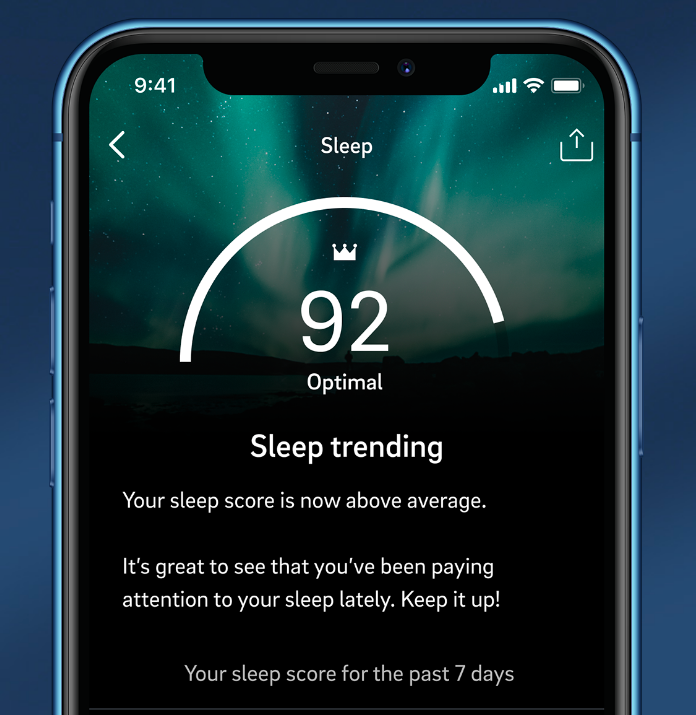
You have the data. You can see the scores every morning. But you are still waking tired, your readiness is inconsistent and your HRV is not moving in the right direction. The Oura Ring is one of the most powerful sleep tools available — but data alone does not create change. Here is how to turn your numbers into real results.
You Have the Ring. But Are You Getting the Results?
Every morning the data is there. Sleep score. Readiness score. HRV. Resting heart rate. Deep sleep percentage. And yet — many Oura Ring users still wake feeling flat, struggle to sustain energy through the day, and watch their scores stay stubbornly in the 60s and 70s without understanding why.
This is one of the most common patterns among high performers, executives and athletes across the UK, USA and Canada who invest in a premium wearable and then feel frustrated that the numbers are not improving. The Oura Ring does not automatically fix your sleep. It shows you what is happening. What comes next — interpreting the data correctly, identifying the root causes and building a targeted protocol — is where most people get stuck.
That is exactly what working with an Oura Ring sleep coach is designed to solve.
What Your Oura Ring Is Actually Measuring
Before you can optimise the scores, you need to understand what each metric reflects — and why it matters for performance. The Oura Ring tracks the following key signals:
Sleep Score
A composite score built from sleep duration, efficiency, deep sleep, REM sleep, timing and latency. It reflects overall sleep quality for the night.
Readiness Score
Your most actionable daily metric — it integrates HRV, resting heart rate, recovery from previous days and sleep quality to tell you how prepared your nervous system is to take on physical or cognitive stress.
Heart Rate Variability (HRV)
The variation between heartbeats during sleep. Higher variability indicates a well-recovered, resilient nervous system. Your HRV baseline — tracked over 30 days — is one of the most sensitive indicators of long-term health and recovery.
Resting Heart Rate
A lower resting heart rate generally indicates better cardiovascular fitness and parasympathetic recovery. A rising baseline over days signals stress, illness or poor recovery.
Deep Sleep (Slow Wave Sleep)
The most physically restorative stage of sleep. Deep sleep drives growth hormone release, tissue repair, immune function and memory consolidation. Most adults need 90–120 minutes per night.
REM Sleep
Critical for emotional regulation, creativity, cognitive processing and performance. REM sleep is concentrated in the second half of the night and is highly sensitive to alcohol, stress and poor sleep timing.
Body Temperature Trends
The Oura Ring tracks nightly temperature deviation from your personal baseline — an early signal of illness, hormonal shifts, poor recovery or circadian disruption.
Sleep Timing and Consistency
The Oura Ring scores consistency of sleep and wake times — a key driver of circadian rhythm quality and all downstream performance metrics.
Why Data Alone Does Not Create Change
This is the gap that frustrates most Oura Ring owners. You can see the score. You can see the deep sleep is low. You can see the HRV is down. But without understanding why — specifically, for your biology and lifestyle — it is nearly impossible to know what to fix first.
The Oura app provides useful averages and correlations. But it cannot interview you about your schedule, stress load, eating habits, travel patterns and training demands. It cannot identify whether your low HRV is driven by alcohol, overtraining, high cortisol, poor sleep timing or a combination of all four. And it certainly cannot hold you accountable to making the necessary changes under pressure.
An experienced Oura Ring sleep coach — or Oura Ring consultant — bridges that gap. They bring the analytical framework, the personalised strategy and the accountability structure that turns data into measurable improvement.
The Most Common Reasons Your Oura Scores Stay Low
If your sleep score, readiness or HRV are consistently below where they should be, one or more of the following are usually responsible:
- Inconsistent sleep and wake times — your circadian rhythm thrives on regularity and suffers without it
- Alcohol within 3–4 hours of sleep — even moderate drinking suppresses deep sleep and HRV measurably
- Late evening meals — digestion elevates heart rate and core temperature, directly disrupting sleep architecture
- Unmanaged stress load — high cortisol in the evening prevents the nervous system from downshifting into recovery mode
- Overtraining without adequate recovery — training stimulus without sufficient sleep suppresses HRV over time
- Circadian misalignment — working late, late-night screens and irregular schedules shift your biological clock, fragmenting sleep quality
- Late caffeine intake — caffeine has a half-life of 5–7 hours and reduces deep sleep even when consumed in the early afternoon
- Travel and time zone disruption — jet lag is among the most acute circadian disruptors and requires a specific protocol to manage
- Chronic under-recovery — compounding poor sleep nights without addressing root causes leads to a declining HRV baseline over weeks and months
The challenge is that most people have multiple contributing factors running simultaneously — and addressing only one produces limited results. Identifying the hierarchy of what to fix first, for your specific biology, is where a qualified Oura sleep coach adds immediate value.
Get Your Oura Data Professionally Analysed
As an Approved Oura Teams Provider, we access your sleep data directly and build a targeted plan around what the numbers are actually showing. Apply to start improving your scores.
Apply for CoachingHow an Oura Ring Sleep Coach Accelerates Your Results
Working with a specialist who understands both the Oura Ring data and the underlying sleep science removes the guesswork entirely. Here is what that process looks like in practice:
Identify Your Specific Bottlenecks
Rather than generic sleep hygiene advice, we analyse your Oura trends, patterns and deviations to identify the two or three factors causing the greatest drag on your scores.
Build a Targeted Protocol
A personalised plan is built around your biology, schedule, lifestyle and goals — not a template. Every recommendation is grounded in your data and your life demands.
Improve Sleep Architecture
Targeted interventions to increase deep sleep, extend REM cycles and improve overall sleep efficiency — the building blocks of a higher sleep score.
Raise Your HRV Baseline
A rising HRV baseline over 4–12 weeks is one of the clearest signals of genuine physiological improvement. We use evidence-based strategies to move your trend upward.
Improve Readiness and Daily Output
Higher readiness scores reflect a better-recovered nervous system — translating directly into sharper cognitive performance, better emotional regulation and more consistent energy.
Weekly Data Review and Refinement
As an Approved Oura Teams Provider, we access your data directly and adjust your protocol weekly based on what the scores are showing — not what you guess is happening.
What Clients With Oura Rings Typically Want to Achieve
The outcomes our clients are working toward — and consistently achieving — include:
85+
Sleep Score
Moving from the 60–70 range into consistently strong scores above 85.
↑ HRV
Rising Baseline
A measurably higher 30-day HRV average, indicating genuine nervous system recovery.
↓ RHR
Resting Heart Rate
A declining resting heart rate reflecting improved cardiovascular recovery and sleep quality.
90+
Readiness Score
Regularly high readiness translating into sharper focus, better decisions and sustainable output.
2×
Deep Sleep
Doubling deep sleep within 4–6 weeks through targeted lifestyle and environment changes.
300%+
REM Increase
Significant REM sleep increases reported by clients eliminating key suppressants from their routine.
Why High Performers Across the UK, USA and Canada Use Coaching With Wearables
The highest-performing individuals — whether they are running companies in London, building businesses in New York or training in Toronto — understand that elite performance is not accidental. It is systematically engineered.
Wearables like the Oura Ring have given serious professionals access to data that was previously only available in elite sports labs. But the data is only valuable if it drives better decisions and measurable behaviour change. That requires expertise.
Online Oura Ring coaching works exceptionally well for high performers because the entire process — from data access to weekly calls to protocol refinement — operates remotely. Whether you are based in London, Manchester, New York, Los Angeles, Toronto or Vancouver, the coaching experience is identical: data-driven, personalised and accountable.
The executives and athletes who get the most from their Oura Ring are not the ones who track their scores obsessively. They are the ones who work with someone qualified to turn those scores into a targeted system — and then execute it consistently.
Introducing the Circadian Advantage Method
Sleep Performance Coach is led by Angus Buckle — an 8-year specialist in sleep performance, an Approved Oura Teams Provider and the creator of the Circadian Advantage Method.
The Circadian Advantage Method is a science-backed system that uses your Oura data — alongside optional DNA and bloodwork analysis — to identify and address the specific drivers of poor sleep for your biology. It is not generic. It is built entirely around you.
Deep Dive Assessment
A comprehensive intake covering sleep history, lifestyle, schedule and performance goals.
Analyse with Oura Data & DNA
Your wearable data and optional genetic insights are used to identify your biological sleep drivers.
Adaptation
Protocols are continuously refined around your results, travel schedule and life demands.
Optimise
Focus on the highest-impact behaviours to reach peak mental and physical performance.
Improve Your Sleep Score and Readiness — Starting Now
Apply for private coaching and get expert eyes on your Oura data. We identify exactly what is limiting your scores — and build the plan to fix it.
Frequently Asked Questions
What is a good Oura sleep score?
A sleep score of 85 or above is considered good by Oura standards. Consistently scoring in this range reflects sufficient sleep duration, well-structured sleep architecture and efficient transitions between sleep stages. Scores regularly falling below 70 are a clear signal that something specific is disrupting your sleep quality or duration — and is worth investigating with professional guidance.
Can coaching improve HRV?
Yes — significantly and measurably. HRV responds directly to the right lifestyle interventions. Consistent sleep timing, alcohol reduction, managed stress load, appropriate training intensity and hydration are all proven levers. The key is knowing which factors are suppressing your HRV specifically, and implementing the right changes in the right order. Coaching provides the personalised plan and the accountability to execute it.
Why is my readiness score low?
Low readiness is typically caused by poor sleep quality, elevated resting heart rate, suppressed HRV, high cumulative stress or overtraining. Because multiple factors can contribute simultaneously, identifying the primary driver for your pattern — rather than making broad lifestyle changes and hoping for improvement — is where working with an Oura Ring consultant makes a significant difference.
Is Oura better than Whoop for sleep tracking?
Both are excellent and class-leading devices. The Oura Ring tends to provide more accurate sleep stage data and temperature trend tracking, while Whoop focuses primarily on recovery in the context of training load. Within our coaching programmes, we work effectively with Oura Ring, Whoop and Apple Watch data — the right tool is the one you will consistently wear and engage with.
Can you improve deep sleep naturally?
Yes — and the improvements can be dramatic. Deep sleep is highly sensitive to bedroom temperature, alcohol intake, eating timing, physical activity type and timing, and stress load. With a personalised protocol targeting the specific factors suppressing your deep sleep, many clients see it double within four to six weeks — without supplements or medication.
Your Oura Ring Is Only as Valuable as the Action You Take From It
Apply for private coaching and work with an Approved Oura Teams Provider to turn your data into a personalised system that improves your sleep score, HRV, readiness and daily performance.
Apply for CoachingPrivate coaching available online — UK, USA and Canada.